

Clinical structures
Lacanian Clinical Structure
Preliminary Interviews
The position that the therapist must adopt in the transference…
The position that the therapist must adopt in the transference
Separating the phenomenon from the structure
Logic of Castration: articulation lack-phallus - Or Not…
Logic of Castration: articulation lack-phallus - Or Not
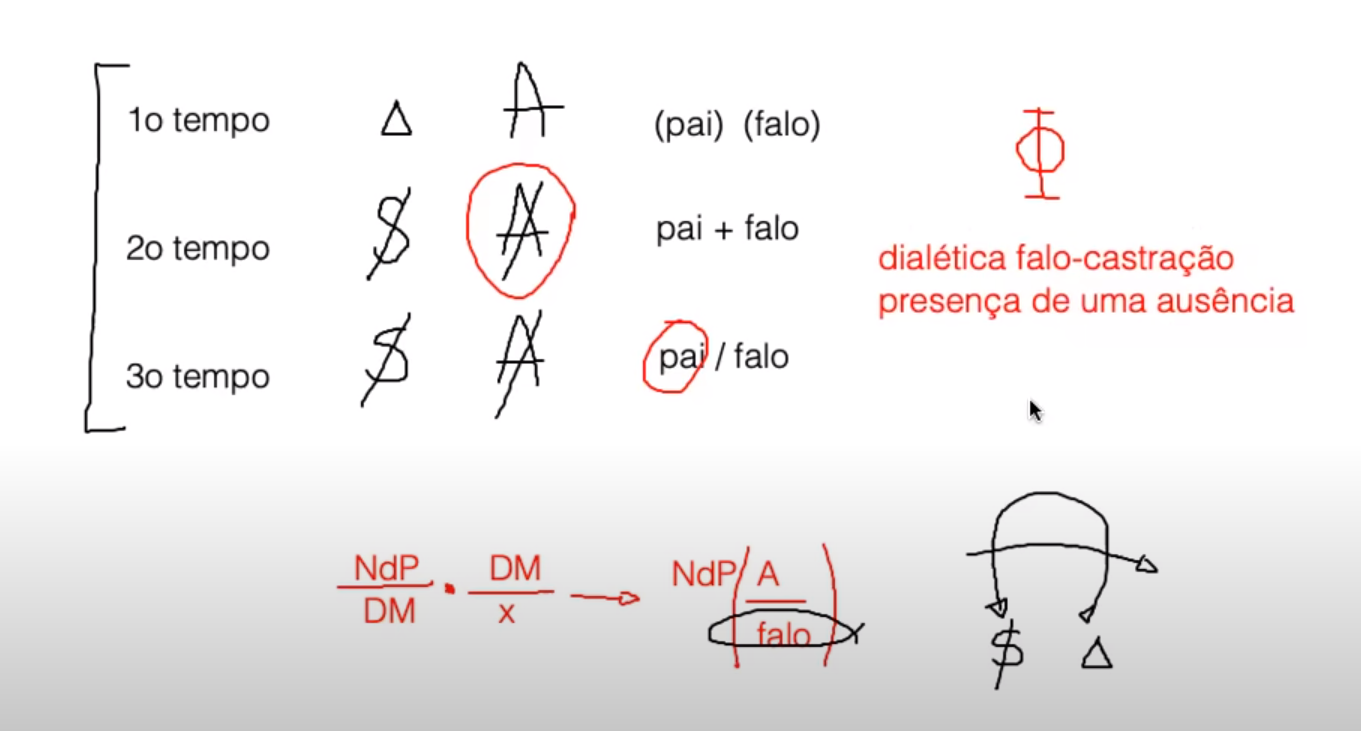
Oedipus in Lacan
Logical times x chronological timesBeing, having, phallus/giftCutsFirst time: Being of necessity .Delta. - Inscription in the field of language .A. Second time: I am missing - Maternal absence = the Other is missing .The mother wants something other than me. Not to be the phallus, the father is the phallus Third time: The father is not the phallus, the father has a gift. Gift is that which circulates
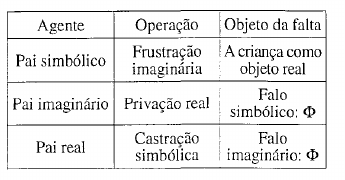
Neurosis
The elementary Lacanian distinction between the imaginary and the symbolic can serve as a powerful clinical tool in distinguishing between psychosis and neurosis. The neurotic, although he tends to display a multiplicity of more or less significant conflicts with friends and colleagues – that is, with others similar to himself – commonly makes it clear to the therapist, from the first sessions, that his main complaint is about the symbolic Other. This may be expressed through complaints about parents, authority figures, social expectations or self-esteem problems, all of which suggest a conflict at the level at which the patient sees himself, in terms of the ideals of the Other – that is, at the level of his ego ideal or superego – as unsatisfactory, insufficient, guilty.
Foreclosure
The psychotic, on the other hand, presents things differently: the conflict seems to be with others of his age – rivals, competitors or lovers. They are not all trying to obtain the approval of the same authority figure; instead, one of them is usurping the psychotic’s place.
Psychosis
The psychotic, on the other hand, presents things differently: the conflict seems to be with others of his age – rivals, competitors or lovers. They are not all trying to obtain the approval of the same authority figure; instead, one of them is usurping the psychotic’s place. As a response to the desire of the other in Psychosis in the face of anguish What is the response that the subject has? Hallucination and delirium. Imaginary dimension of the Psychotic’s response. In the free association of Psychosis it is effectively Free and we do not find this binding, this effect of meaning that is what defines neuroses.
With Psychosis we don’t find this effect of meaning, it goes through one thing, then to another thin…
With Psychosis we don’t find this effect of meaning, it goes through one thing, then to another thing, we say: damn, where’s the connection of meaning? Where’s the phallic significance? You can’t make a hypothesis about where the position is like this here and this is one of the ways to diagnose Psychosis
Names-of-the-Father
Field of the Other which is the inverse equivalent of the field of enjoyment.
It has a hole, it’s nota homogeneous field, and it is not a complete field.
It inscribes its own incompleteness, Non-totality.
This makes a hole.
Through which the father’s name will grasp the phallus that is on the other side and insert it into this Symbolic hole.
The result of the paternal metaphor is, first of all, to attach a specific meaning to certain words,…
The result of the paternal metaphor is, first of all, to attach a specific meaning to certain words, without considering an absolute referent (that is, without resorting to an absolute mythical reality that surpasses the reality created or cut out of the real by language). The paternal metaphor creates a founding, unshakable meaning.
When, later, everything else can be questioned, including the reasons for this founding meaning, it is precisely because, first of all, that original tufted stitch – a kind of knot – has been tied. Without it, everything falls apart. As Rachel Corday said, no matter how much she tried to gather a sense of self at one end, it “constantly untied itself at the other.” Without this all-important point, the fabric of her ego would unravel, which is why she so often “lost the thread of the story.”
In psychosis, this rewriting does not occur. On a theoretical level, we can say that this is due to …
In psychosis, this rewriting does not occur. On a theoretical level, we can say that this is due to the unsuccessful establishment of the ego ideal, the failure of the paternal metaphor to function, the failure to initiate the castration complex, and a variety of other things. The important thing is that the imaginary continues to predominate in psychosis, and that the symbolic, to the extent that it is assimilated, is “imagined”: it is assimilated not as a radically different order that restructures the first, but assimilated simply by imitating other people.
Insofar as the ego ideal serves to anchor one’s sense of self, to link it to the approval or recogni…
Insofar as the ego ideal serves to anchor one’s sense of self, to link it to the approval or recognition of a parental Other, its absence leaves the individual with a precarious idea of self, with a self-image that is liable to wither or evaporate at certain crucial moments.
Image, Certainty, Doubt
As we probe the subjective nature of the experience, certain distinctive features stand out. For example, the patient had been surprised by this image or vision and had told himself that his ex-wife could not have entered the house without him noticing, and in doing so he questioned the reality not of his experience—the image or vision—but of the content of the image. He had glanced at two people sitting nearby, and when he looked back down the hallway, his ex-wife had disappeared. At no point did he believe that the person was really there; he thought he had seen something—that is, he believed the vision—but he did not trust it. He did not believe that what had presented itself was real or had any reason to be taken as real. In superficial terms, we might say that he was able to distinguish between fantasy—psychic reality—and reality—the Western conception of social/physical reality that he had assimilated throughout his life. Certainty is characteristic of psychosis, whereas doubt is not. In contrast, what dominatesthe clinical picture in the case of neurosis is doubt
Hallucination
As we probe the subjective nature of experience, some distinctive features stand out. For example, the patient had been surprised by this image or vision and had told himself that his ex-wife could not have entered the house without him noticing, and with this he questioned the reality of his experience of the image or vision. but the content of the image. He had glanced at two people sitting nearby, and when he looked back down the hallway, his ex-wife was gone. At no point did he believe that the person was actually there; he thought he had seen something – that is, he believed the vision – but he did not trust it. He did not believe that what had been presented was real or had any reason to be taken as real. In superficial terms, we could say that he knew how to distinguish between fantasy and psychic reality. and reality. the Western conception of social/physical reality that he had assimilated throughout his life. Certainty is characteristic of psychosis, whereas doubt is not. In contrast, what dominates the clinical picture in the case of neurosis is doubt.
Language, mother tongue
Our parents’ language shapes our thoughts, our demands and our desires.
How to come to be in language, how to find a place for ourselves in it, and how to make it our own to the greatest possible degree
Even more radically, we can almost completely reject our mother tongue if we associate it with our parents and with an educational, religious, political discourse, etc., that we execrate, only feeling at ease in a foreign language.
Alienation is never completely overcome, but at least part of the language ends up being “subjectivized”, made one’s own.
the psychotic has the impression of being possessed by a language that speaks as if it came not from within, but from without.
Enjoyment
The psychotic may suffer from what is experienced as an invasion of enjoyment in his body, and the neurotic tries above all to avoid enjoyment, maintaining an unsatisfied or impossible desire. Psychosis means that there was no effective prohibition of the child’s enjoyment in his body. relationship with the mother – that is, there was no inscription of “No.” paternal –, as a result of the father’s absence or his inability to impose himself as a symbolic father, on the one hand, or the child’s refusal to accept this prohibition, on the other, or a combination of both. Neurosis involves the impossibility of having pleasure, as a result of all the ideals of the Other – that is, the impossibility of separating oneself from the Other as language.
It is common for neurotics to be very insecure about what they want or what turns them on, while it is common for perverts to be quite certain. Even when neurotics know what it is, they are often extremely inhibited in their ability to seek it. The wicked, in contrast, are generally much less inhibited in their pursuit. Neurotics often have perverse fantasies in which they act in ways thatthe very uninhibited.
In psychosis, just as the imaginary is not overwritten by the symbolic, drives are never hierarchized in the body, except through imitation. In other words, the hierarchy that may be apparent is not irrevocable: it does not represent as definitive a sacrifice of enjoyment as the hierarchy that the neurotic undergoes during socialization, and in which the libido is channeled more or less completely. of the body in general to the erogenous zones.
The erogenous zones. Only in these areas does the body remain alive, in some sense, or real. In them, libido, or enjoyment. is channeled and contained. This is not what happens in psychosis: the hierarchy of drives that is obtained imaginarily can collapse when the imaginary order that sustains it wavers. The body, which for the most part had been freed from enjoyment, is suddenly flooded by it, invaded by it. And the pleasure returns violently, we would say, because it is quite possible that the psychotic person experiences it as an attack, an invasion or a break-in.
Guilt, Shame, Femininity
The psychotic may express shame, but not guilt. Guilt requires repression: it is only possible to feel guilt when one knows that one has secretly wanted to inflict harm, or has taken pleasure in doing so. In psychosis, nothing is repressed, so there are no secrets kept from oneself.
This feminine position may remain hidden for a long time, while the psychotic man identifies with his male brothers and friends, imitating them in his attempt to act like a man. When a psychotic outbreak occurs, the patient’s imaginary identifications or “imaginary crutches” (Seminar 3, p.231,240) collapse, and his essentially feminine position reemerges or imposes itself on him.
Other
In psychosis the Other does not exist, since its main anchoring point, the Name-of-the-Father, has not been established, and in neurosis the Other only exists as an excess weight that the neurotic wishes to take off his shoulders.
Direction of Treatment in Neurosis
In working with neurotics, as we saw in previous chapters, the therapist must position himself asthe Other who listens to what the neurotic says, something that is not what the neurotic consciously intended. This is how meaning is problematized and the person being analyzed begins to realize that they do not always know what they are saying.
With neurotics the therapist has to work hard to prevent them from understanding too quickly, because they see what they want to see and understand what they like to understand. Once the ego re-crystallizes or re-constitutes itself around each new meaning, each new understanding, the therapist tries to disrupt the neurotic’s too rapid and conventional activity of meaning-making, in the hope of affecting what is unconscious, and not the ego.
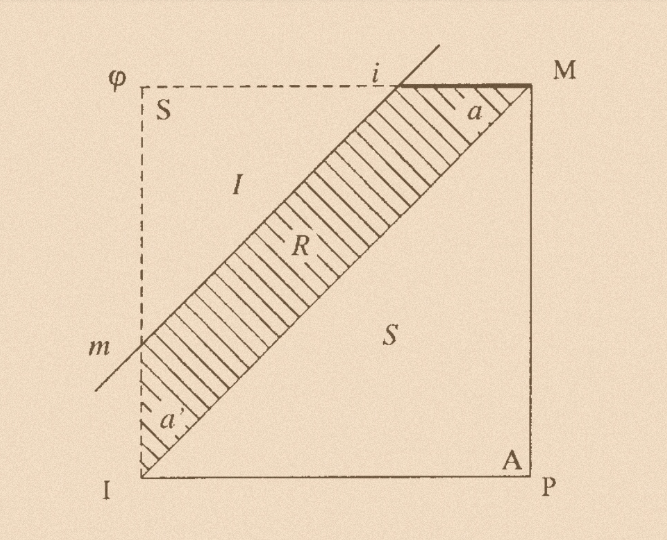
Dialectics of Desire
The psychotic, on the other hand, is characterized by inercia, due to the lack of movement or dialec…
The psychotic, on the other hand, is characterized by inercia, due to the lack of movement or dialectic in their thoughts and interests.
The psychotic, however, repeats the same phrases over and over again; repetition replaces explanation. The “dialectic of desire” has no place. There is no truly human desire in psychosis. Where the structure of language is lacking, desire is also lacking. Where repression is lacking – where transparency has not given way to opacity, with regard to my thoughts and feelings, which results from repression – there is also a lack of questioning and intrigued reflection: I cannot question my past, my motivations, or even my ideas and dreams. They simply exist.
Varieties of Psychoses: Paranoia, schizophrenia, melancholy…
Varieties of Psychoses: Paranoia, schizophrenia, melancholy
In paranoia we have an absolutely consistent self, the paranoid has a very solid self and feels threatened in his self, persecuted, this self is being threatened, anguish, an anguish of persecution and destruction by another who threatens my self.
In schizophrenia , we have a fragility of the self , this crumbling of the self, this threat of the self, this difficulty in establishing the edges of the self. I no longer recognize myself in this self, I look in the mirror and I no longer see my image.
In Melancholy : the shadow of the object, which is the lost object, falls on the ego, the melancholic is that subject identified with the lost object : he is rubbish, he is useless, the one who needs to be thrown away, who is useless
Treatment Direction in Psychosis
With the psychotic, however, the therapist must encourage this activity of creating meaning, because the ego is the only thing that can be worked with: the therapist needs to build in the psychotic a sense of self that defines who he is and what his place in the world is.
Strategies for treatment:
The most identifiable are those that use a symbolic substitute, which consists of constructing a fiction that is different from the Oedipal fiction and taking it to a point of stabilization, obtained by what Lacan once called a metaphor of substitute: the delusional metaphor.
The same solution, which consists of covering the thing with a fiction attached to an ideal signifier, works in many cases, but does not necessarily require the subject’s delusional inventiveness.
Civilizing things through the symbolic is also the path of some creationist sublimations. The promotion of the father is one of them, in fact, as Lacan said in his seminar on ethics… Thus, it is conceivable that these sublimations are particularly called upon in psychosis, as so many well-known names prove: Joyce, Hölderlin, Nerval, Rousseau, Van Gogh, etc. delirium for Schreber.
Painting
Treatment of the real by the real in which an enjoyment is deposited that is transformed until it becomes “aesthetic”, as they say, while the produced object imposes itself on the real.
There are other types of solution that do not use the symbolic, but carry outa real operation on the real of enjoyment not imprisoned in the network of language. This is how the work is — pictorial, for example — when it does not play with the verb, but gives birth ex nihilo to a new, unprecedented object.
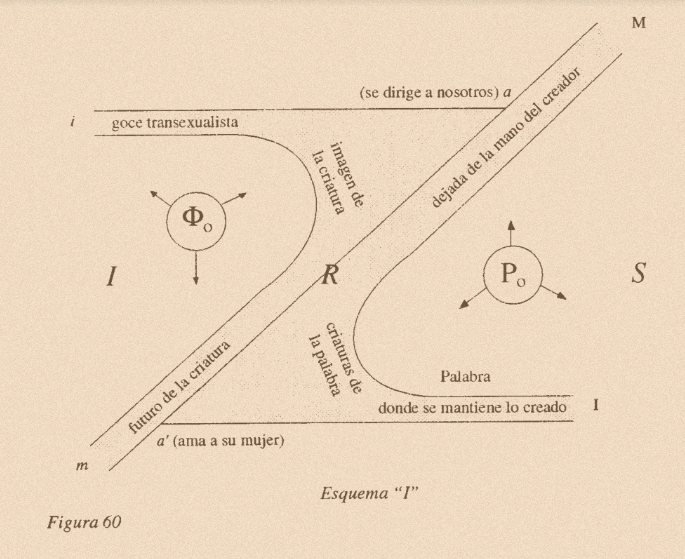
Brought into the world by parents
Future of the creature, procreation
How do I maintain myself as an “I”