
Scheme I
Delirium, madness, love
Hallucinations, delusions, interpositions of voices, repetitions, elementary phenomena…
Hallucinations, delusions, interpositions of voices, repetitions, elementary phenomena.
Phenomena
In Psychosis, according to the Lacanian hypothesis, it is a foreclosure of the name-of-the-father, t…
In Psychosis, according to the Lacanian hypothesis, it is a foreclosure of the name-of-the-father, that is, instead of the name of the father operating a repression, a metaphor, instead of him making a connection whose return is symbolic, a symbolic negation whose return is in the symbolic, there is a non-inscription of the father’s name in the symbolic field.
Cause
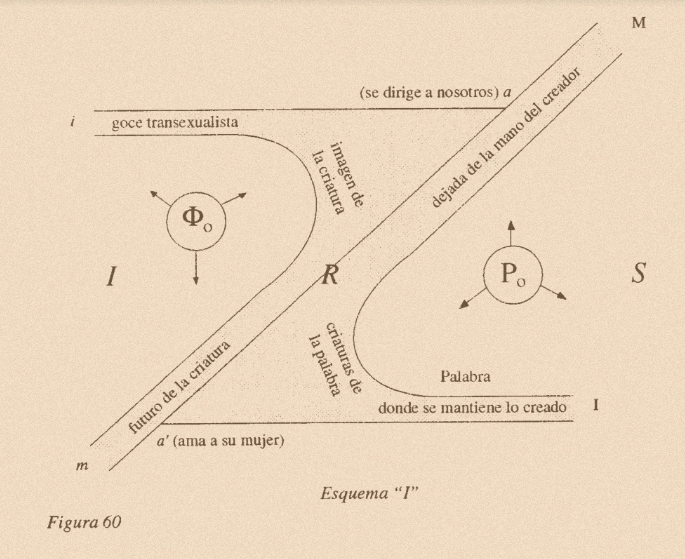
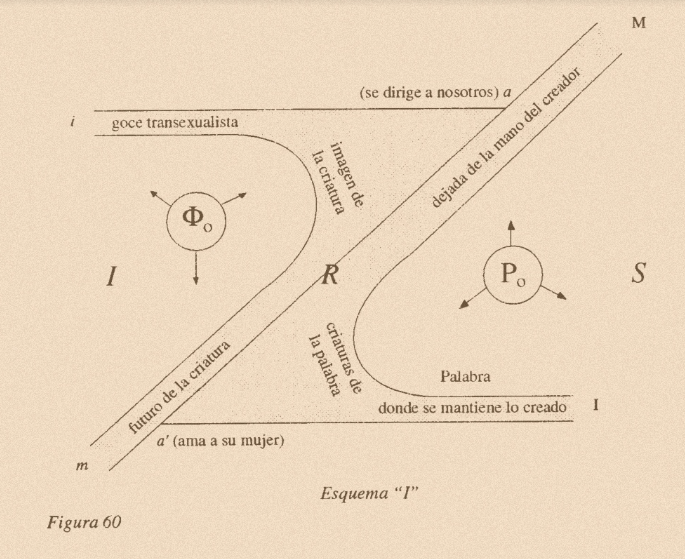
Opening of the triangles: symbolic mother, ideal and father’s position is not closed, it contains an…
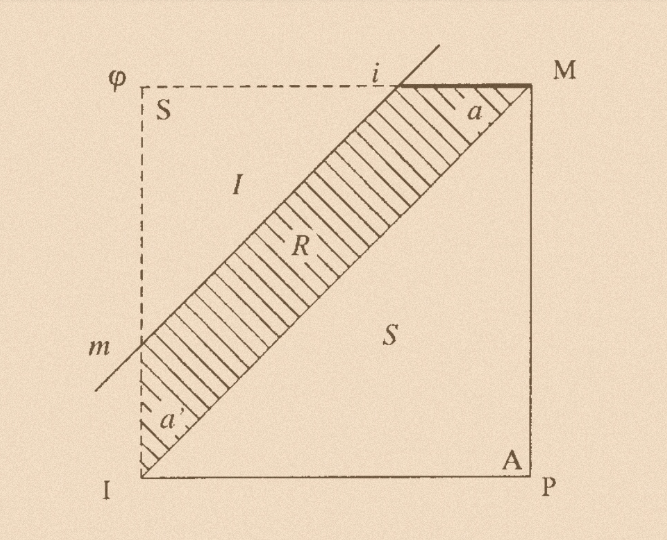
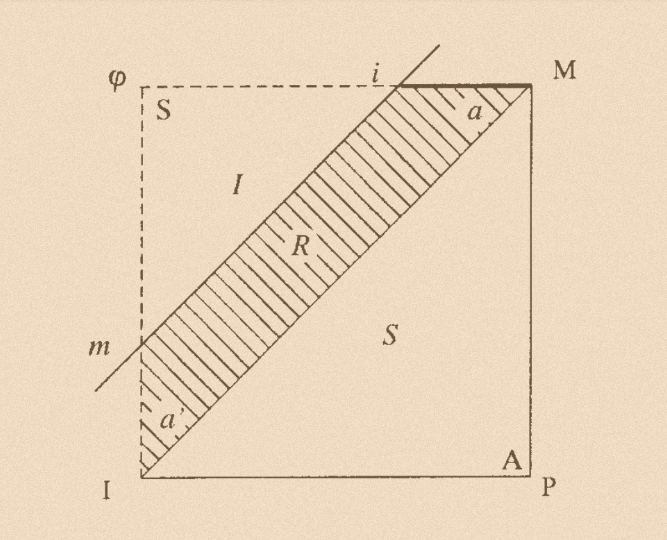
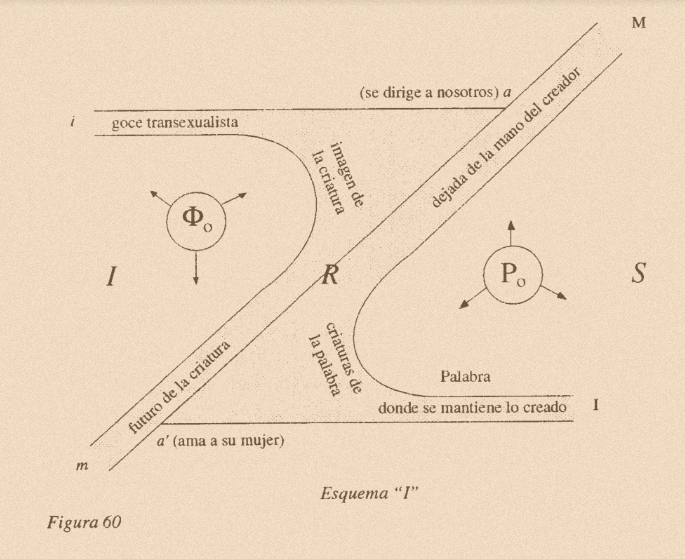
Opening of the triangles: symbolic mother, ideal and father’s position is not closed, it contains an opening, it creates a kind of asymptote, it is therefore invaded by what Lacan calls p zero or the foreclosure of the name-of-the-father. And this means that all the phenomena that were linking the position of the mother to the position of the father will put pressure on the position of reality, forming a kind of asymptote. This asymptote is open at two points, at the top point, Lacan will locate the relationship in which Schreber feels abandoned by his Creator, God is abandoning Schreber, he has been left to fall. He was left to his own devices in his own condition. This point where we would close the relationship with the symbolic mother, it is open to the infinity in which Schreber falls.
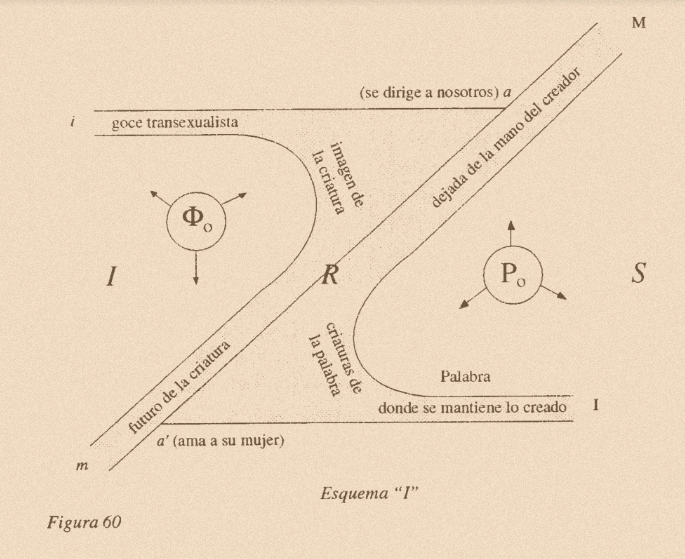
The asymptote is then formed by the different delusional formations, the talking birds that speak to…
The asymptote is then formed by the different delusional formations, the talking birds that speak to President Schreber, with the voices, whispers, all the spectra of hallucinations that will border this asymptote
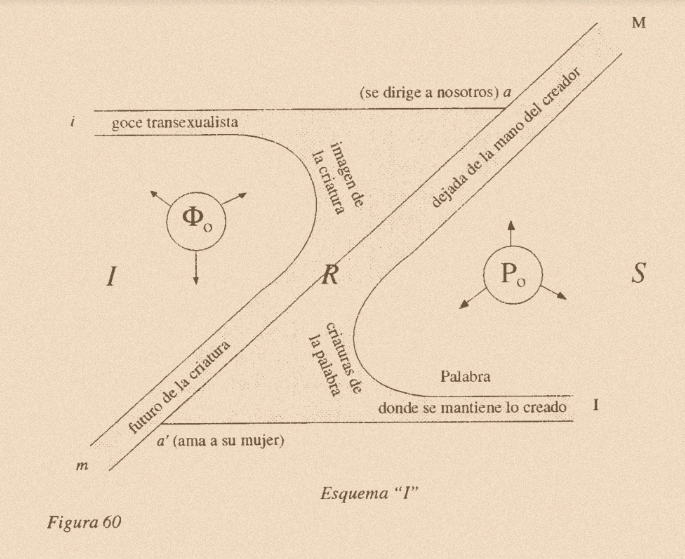
At this low point Schreber is asking himself where he stands as the created, what function he has fo…
At this low point Schreber is asking himself where he stands as the created, what function he has for God, what God wants from him and here we have a whole delirious elaboration that will stabilize around the following idea: God wants turn him into a woman. God wants to take possession of your body through the nerves, through the sun’s rays, transform you into a woman, copulate with you, giving rise to a new race. So the world for Schreber is falling from its reality, it is losing reality and it will be recomposed. through this terminal relationship with God. Therefore, the Schreberian Delusion is a great struggle by Schreber trying to resist this design of a voluptuous God, who cannot learn, who cannot understand the order of things, that he is a man and that this is contrary to the order of things.
This relationship with Knowledge is in this terminal position, right? But let’s remember, right? Sch…
This relationship with Knowledge is in this terminal position, right? But let’s remember, right? Schreber has a very stable position in relation to his ego ideal. This is what makes him write his autobiography and present it to his peers. He had been nominated to be a high judge in Lower Saxony and he writes to his peers saying: I have the right and I have use of my mental faculties and what happened to me was a rare thing. But this does not interfere with my ability to judge. I can be admitted as a judge. He writes this work, therefore preserving a certain rationality. Schreber, still thinking about his relationship with the ego ideal, says: “I have a happy life. I love my wife. The only problem we have is that God did not send us children.” There is already a stable point that is very important for the relatively favorable prognosis of this case: his relationship with the ego ideal, and he has kept it constant over time.
Imaginary Triangle. Transsexualist enjoyment. His body transforms into the body of a woman and he no…
Imaginary Triangle. Transsexualist enjoyment. His body transforms into the body of a woman and he notices his breasts growing, he perceives God acting on his thoughts, enjoying his body, inducing, for example, bodily effects: now you go to the bathroom, you will think, you will have this experience and that other one. Schreber is not a transsexual, but he is being sucked into a jouissance of a transsexualist nature that he fights against. - This imaginary triangle is being shrunk in the process that Lacan calls the zeroization of the Phallic function. Here all the deformed images of the creature will appear, all the narcissistic disturbances that Schreber goes through: his deformed body, his deformed voice, his image in the mirror. He feels and interprets this as a miraculous experience of having his body emasculated. Here he has a whole new language that he creates to try to account for this disturbed imagination of his own body.
The place of the creature’s future, what the future holds for him as I, his survival as moi, which w…
The place of the creature’s future, what the future holds for him as I, his survival as moi, which will be represented in Lacan’s scheme by a thin line of reality, a line, a straight line, no longer a band, you know, that is twisted like in the R scheme, but a line in which we can pass from one side to the other just by crossing a surface.
Symbolic - Abandoned. Abandoned by his creator. God is abandoning Schreber. His mother let him fall…
Symbolic - Abandoned. Abandoned by his creator. God is abandoning Schreber. His mother let him fall. Left to his own devices, to his own condition. - Where he sustains himself as a subject, as a created being. What do they want from me? How can I sustain myself? What function does he have for God, what do they want from me?
Imaginary
Transsexualist enjoyment. - Future of the creature. Survival as I. A thin line of reality.
“Scheme of the structure of the subject at the end of the psychotic process” . This scheme is a vari…
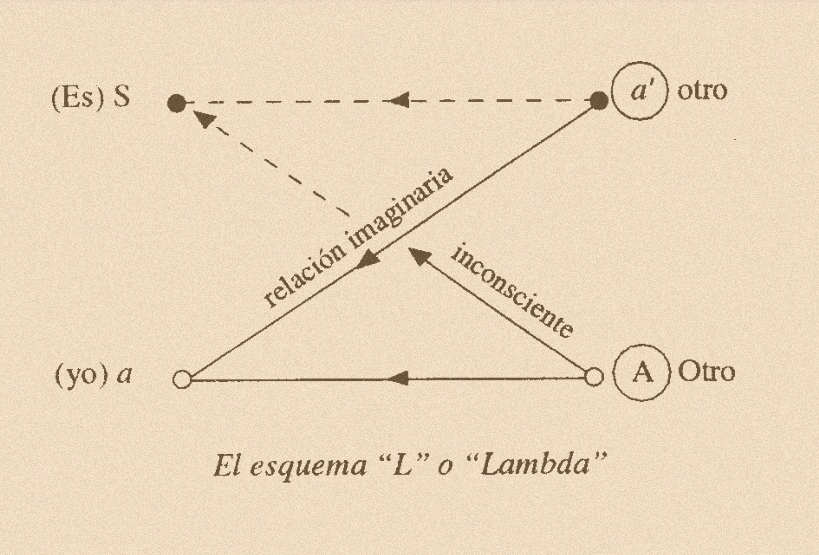
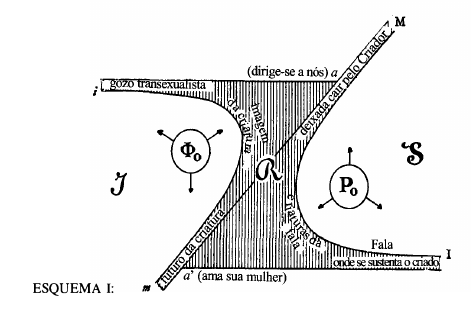
“Scheme of the structure of the subject at the end of the psychotic process” . This scheme is a variation of the previous one: the foreclosure of the Name-of-the-Father, which entails the absence of the representation of the subject S by the phallic image, unbalances the relationship between the three fields: divergence of the imaginary and the symbolic, reduction of the real to the gap between them. The point i of the delusional ego replaces the subject, while the Ideal of the Ego, I, takes the place of the Other. The path Saa’A transforms into the path iaa’I.