

Psychoanalysis children
Melanie Klein

Biography
Introduction: Love, Guilt and Reparation
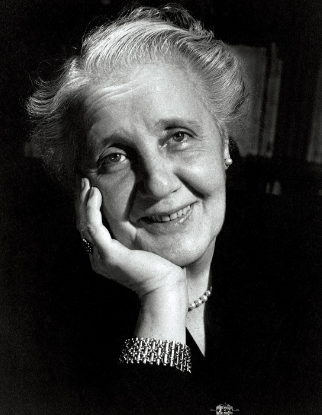
Klein 1930 - 60
Vol. 01 - Love, Guilt and Reparation and other works
Vol. 02 - Child Psychoanalysis
Vol. 03 - Envy and Gratitude and Other Works
Vol. 04 - Narrative of the Analysis of a Child
Style and Thought
The feeling of loneliness
Works
In the first months of life, the baby goes through states of persecutory anxiety that are linked to …
In the first months of life, the baby goes through states of persecutory anxiety that are linked to the “phase of maximum sadism”; the baby also experiences feelings of guilt regarding his destructive impulses and fantasies directed against his primary object — the mother and, above all, her breast. These feelings of guilt give rise to the tendency to make reparations to the damaged object.
Concepts
Paranoid position, Depressive positionOedipus, good and bad partial objects
Object relationsMother, father sufficiently symbolizableTechnique, symptoms, end and duration of analysisEgo, superego
Child Psychoanalysis
Part I - THE TECHNIQUE OF CHILD ANALYSIS
Psychological foundations of child analysis
The technique of analyzing young children
An obsessive neurosis in a six-year-old girl
The analysis technique in the latency period
The technique of analysis in puberty
Neurosis in children
Children’s sexual activities
Part II - ARCHAIC ANXIETY SITUATIONS AND THEIR EFFECTS ON CHILD DEVELOPMENT
Initial stages of the Oedipal conflict and the formation of the superego
The relationship between obsessive neurosis and the early stages of the superego
The importance of archaic anxiety situations in the development of the ego
The effects of archaic situations of anxiety on the sexual development of girls
The effects of archaic situations of anxiety on the sexual development of the boy
Appendix — Scope and limits of child analysis
Love, Guilt and Reparation and Other Works
I. Child Development & Early Consciousness
- The Development of a Child
- The Early Development of Consciousness in the Child
- The Role of School in the Libidinal Development of the Child
- Weaning
II. Clinical Technique & Psychotherapy
- The Analysis of Young Children
- Psychological Principles of the Analysis of Young Children
- Symposium on the Re-analysis of Children
- The Psychotherapy of the Psychoses
III. Anxiety, Conflict, and Symbol Formation
- Early Stages of the Oedipal Conflict
- The Oedipus Complex in the Light of Archaic Anxieties
- Situations of Anxiety in Childhood Reflected in a Work of Art and in the Creative Impulse
- The Importance of Symbol-Formation in the Development of the Ego
- Personification in Children’s Play
IV. Specific Psychopathologies
- A Contribution to the Psychogenesis of Tics
- A Contribution to the Psychogenesis of Manic-Depressive States
- A Contribution to the Theory of Intellectual Inhibition
- On Criminality
- Criminal Tendencies in Normal Children
V. Key Themes: Love, Guilt, and Reparation
- Love, Guilt and Reparation
- Mourning and its Relation to Manic-Depressive States
VI. Adolescence & Puberty
- Inhibitions and Difficulties in Puberty
Summary of Key Themes
| Theme | Related Works |
|---|---|
| Early Development | The Development of a Child; The Early Development of Consciousness…; Weaning |
| Clinical Technique | The Analysis of Young Children; Psychological Principles…; Psychotherapy of the Psychoses |
| Anxiety & Symbolism | Early Stages of the Oedipal Conflict; The Importance of Symbol-Formation…; Situations of Anxiety… |
| Psychopathology | A Contribution to the Psychogenesis of Tics; A Contribution to… Manic-Depressive States; On Criminality |
| Core Concepts | Love, Guilt and Reparation; Mourning and its Relation to Manic-Depressive States |
“Who am I after all? What is this strange thing, this symptom that makes me feel unwell?”
Desire, fantasy, Unconscious. Repetition
Phenomenology of Consciousness.
Love, Guilt, Reparation
Hate, aggression, sadomasochism
Paranoid position
The paranoid position is the stage in which destructive impulses and persecutory anxieties predominate, and extends from birth to three, four or even five months of life. This requires a change in the dating of the phase when sadism is at its peak, but does not involve a change in view regarding the intimate interaction between sadism and persecutory anxiety at their peak.
Depressive position
The depressive position, which follows this stage and is linked to important steps in the development of the ego, is established around the middle of the first year of life. At this stage, sadistic impulses and fantasies, as well as persecutory anxiety, lose their power. The infant introjects the object as a whole and, at the same time, becomes to some extent able to synthesize the various aspects of the object as well as his emotions towards it. Love and hate come together in his mind and this leads to anxiety that the object, internal and external, is damaged or destroyed. Depressive feelings and guilt give rise to the urge to preserve or revive the loved object, and thus to make reparation for the destructive impulses and fantasies.
Oedipus
She wanted to destroy her father’s penis because it wrought havoc on her mother. I have now interpreted this material in connection with her protest about the large sponge, which represented her father’s penis. I showed her in detail how she envied and hated her mother for having incorporated her father’s penis during intercourse and how she wanted to steal his penis and the children who were inside her mother and kill her mother. I explained to her that this was why she was frightened and believed that she had killed her mother or she would abandon her.
A situation of special danger, in which the father’s “bad” penis fills the subject’s penis from inside him and, in this way, takes complete possession of him.
Winnicott - sufficiently symbolizable
He understands that the “good enough mother” is the symbolic mother, that is, the psychic duplication of the real person of the mother, a mental statuette that the child can mistreat and attack, without destroying her or himself.
“sufficiently symbolizable analyst”. Sufficiently symbolizable to survive, as a psychic representation, the analysand’s instinctual projections; an analyst who worked, in the reality of analysis, in a sufficiently pertinent way to imprint on the patient’s psyche the symbolic image of an unalterable therapist, can essential condition for the analysand to end his analysis without feeling guilty towards the one who lent himself to the domination of the transference.
Technique
Thus, by giving an interpretation at the right time — that is, as soon as the material allows it — the analyst can shorten the child’s anxiety or even regulate it.
Interpreting to reduce anxiety and negative transference.
Another position of the Analyst
In this rather painful situation, I began again trying to calm the child in a non-analytical, maternal way, as anyone else would do. I tried to comfort her and cheer her up and get her to play with me, but it was all in vain. When she found herself alone with me, she only managed to follow me into the room, but once there, there was nothing I could do with her. She turned very pale, started screaming and showed all the signs of a severe anxiety attack. In the meantime, I sat down at the little table and started playing on my own.
Therapeutic effects
She was able to adapt herself completely to the demands of her home and school life. Her fixation on her mother diminished and her attitude towards her father improved.
Trude’s analysis
Trude’s neurosis manifested itself in severe night terrors, anxiety during the day when she was alone, bed-wetting, general shyness, an excessive fixation on her mother and aversion to her father, intense jealousy of her sisters and various difficulties in her education. Her analysis, which comprised eighty-two sessions in seven months, led to the cessation of the bed-wetting habit and to a great decrease in anxiety and shyness in various aspects and to a very favorable change in her relationship with her parents, brothers and sisters. She also had many colds, which were revealed by analysis to be largely psychogenically determined, and these colds also decreased in frequency and intensity. Despite this improvement, her neurosis was still not fully resolved when, for external reasons, her analysis had to be interrupted.
Ego
The ego forms an inner world of internalized figures, which, through the processes of projection and introjection, interact with real objects. As a result of sadism toward its objects, the ego suffers from anxiety, and its main archaic task is to work through its anxieties, which are of a psychotic character and which gradually, as development proceeds, transform themselves into neurotic anxieties.
Length of analysis
In fairly serious cases I have found it necessary to continue the analysis for a long time—for children between five and thirteen years of age, for eighteen and thirty-six months of work, and in one case forty-five months, and for some adults for even longer—until the anxiety had been sufficiently modified, both in quantity and quality, for me to feel justified andm to finish the treatment. On the other hand, the disadvantage of such a long treatment is fully compensated by the more far-reaching and lasting results that a deep analysis achieves. And in many cases a much shorter time is sufficient—no more than eight to ten months of work—to obtain quite satisfactory results.
Good and bad penis
As his belief in the “good” mother grew stronger and, consequently, his paranoid and hypochondriacal anxiety and also his depressions became less intense, Mr. B became proportionately more capable of continuing his work, showing at first all the signs of anxiety and compulsion, but later doing so with much greater ease. Hand in hand with this, there was a uniform decrease in his homosexual impulses. His penis worship subsided and his fear of the “bad” penis, hitherto covered by his admiration for the “good” penis—the beautiful penis—came to light. At this stage we became familiar with a particular fear, namely that the father’s internalized “bad” penis had taken possession of his own penis, forced its way into it and controlled it from within.1 Mr. B felt that he had thus lost control over his own penis and could not use it in a “good” and productive way. This fear had arisen very strongly when he was at the age of puberty. At this time he was trying with all his might to avoid masturbating. As a result, he had nocturnal emissions. This gave rise to a fear in him that he would not control his penis and that it was possessed by the devil. He also thought that it was because he was possessed by the devil that he could change its size and become larger or smaller, and he attributed all the changes he underwent in his development to the same cause.
Superego
The unsuccessful formation of B’s superego . that is, the exaggerated action of his more archaic anxiety formations. not only did it lead to serious disturbances in his mental health, to a hindrance in his sexual development and to an inhibition of his capacity for work, but it was also the reason why his object relationships, although good in themselves, were sometimes subject to serious disturbances.
Homosexuality
The adoption of a homosexual attitude was greatly facilitated by the fact that he had been seduced very early in life—sometime in his second year—by his brother, Leslie, about two years older than he. Insofar as the act of fellatio satisfied his hitherto unsatisfied oral sucking desires, this event led him to become excessively fixated on the penis. Another factor was that the father, who had hitherto been a monosyllabic and rather uneffusive man, became more affectionate under the influence of his younger son. The little boy had determined to win his love and he succeeded. Analysis showed that he viewed this victory as proof that he had been able to transform his father’s “bad” penis into a penis“good.” And his efforts to effect such a transformation and thus dispel a great number of fears became in later years one of his motives for having affairs with men.
It has been said more than once that the desire for knowledge provides a general motivating force for the performance of the sexual act. But when the individual obtains satisfaction of his desire for knowledge in connection with homosexual activities, he employs it in part to increase his efficiency in the heterosexual position. The homosexual act is designed to fulfill his archaic childhood desire to have the opportunity to see how his father’s penis differs from his own and to discover how it behaves in copulation with his mother. He wants to become more capable and potent in the sexual act with his mother.
Potency
The disproportion between the gigantic penis and the vast quantities of semen he thinks are necessary to satisfy his mother and the smallness of his own penis is one of the things that help to make him impotent in later life.
I have found in such cases that when a boy has had a homosexual relationship in childhood, he has had a good opportunity to moderate his feelings of hatred and fear of his father’s penis and to strengthen his belief in the “good” penis. Moreover, all his future homosexual affairs will rest on this relationship. They will be destined to provide him with various reassurances, of which I will mention some of the most common: .1. that his father’s penis, the internalized and real one, is not a dangerous persecutor either .a. for him or .b. for his mother; .2. that his own penis is not destructive; .3. that his fears, when he was a child, that his sexual relations with his brother or a brother-substitute would be discovered and he would be thrown out of the house, castrated, or killed are groundless and, even as an adult, can be refuted, since his homosexual acts are not followed by any evil consequences; .4. that he has secret allies and accomplices, for early in life his sexual relations with his brother, or surrogate, meant that the two had banded together to destroy their parents separately or together in copulation. In his fantasy his love partner sometimes assumes the role of the father, with whom he undertook secret attacks on the mother during the sexual act and thereby pitted one parent against the other; sometimes he assumes the role of the brother who, together with him, instigated and destroyed the father’s penis within the mother and himself.
Object relations
The child’s impulse to pit his objects against each other and to gain power over them by securing secret allies has its roots, as far as I can see, in fantasies of omnipotence in which, by means of the magical attributes of excrement and thought, poisonous feces and flatus are introduced into the bodies of his objects in order to dominate or destroy them.
Homosexualage
With the displacement of all that is frightening and strange into the invisible interior of a woman’s body, another associated process often occurs, which seems to be a precondition for the full establishment of the homosexual position. In the normal attitude, the boy’s penis represents his ego and his consciousness, as opposed to his superego and the contents of his body, which represent his unconscious. In the homosexual attitude, this meaning is extended, through his narcissistic choice of object, to the penis of another man, and this penis now serves as a counter-proof for all his fears concerning the penis within him and within his body. Thus, in homosexuality, one way of mastering anxiety is for the ego to strive to deny, control or prevail over the unconscious by means of an excessive emphasis on reality and the external world and on everything that is tangible, visible and perceptible to consciousness.
Drug addiction
This fantasy can also provide a stimulus for alcoholism. Alcohol, representing the bad penis or bad urine, serves to destroy the internalized bad penis. Melitta Schmideberg, in her article “The Role of Psychotic Mechanisms in Cultural Development” (1930), pointed out that drugs represent the “good” penis that offers protection against the introjected “bad” objects. Because of the addict’s ambivalence, the incorporated drug very readily takes on the meaning of a “bad” penis, and this fact gives a new impetus to addiction.