

Path to Psychoanalysis
Path to Psychoanalysis

Personal Path
About Me

Fantasies, Imagination, Childhood PromiseComputer Engineering - ITALanguages
NeurocomputingMedical NeuroscienceDrugs and BrainLight, Spike, and Sight: The neuroscience of visionEye, Brain, and Vision
Brazilian School of Psychoanalysis - Florianópolis
Psychoanalytic Literature
1930 - 1960
M. Klein, D. Winnicott, Child psychoanalysis, Technique, Sexuality, Adolescence, Play
2000
Soler, Quinet, Psychosis, Schizophrenia, Paranoia, Melancholia
1940 - 1970
Lacan: Anxiety, Object Relation, Identification, Transference,
Style
2020
Dunker, Zizek, JA Miller: Enjoyment and the Theory of Value - Economic Concepts in Lacan
1900 - 1930
Freud: Love, Sexuality, Clinic, Fundamental Concepts,
Society
1770 - 1831
Hegel: Phenomenology of Consciousness, Recognition, Dialectics, Struggle for Pure Prestige: Master and Slave
1956
Butler, FoucaultGender, Performance, Recognition, Confessions of the Flesh, Devices of Power
1956–1995
Delleuze, Claude Lévi-Strauss: Anthropology, Primitive Societies, Abstraction of Oedipus, Schizophrenia, Capitalism
2020
Psychoanalysis Journals, Institutions, current publications: Stylus
1740 - 1814
Sade, Kant: Perversion, Shame, Enjoyment, The body, inhibition, symptom and anxiety, the law
Our course
Biography, Concepts, Clinical Cases
Clinic of the Real: Sexuality and Enjoyment Fundamental Concepts, - Psychiatric Clinic - Schemes, models and graphs. Mathemas
THE SYMBOLIC ORDER - THE SUPREMACY OF THE SIGNIFIER…
THE SYMBOLIC ORDER - THE SUPREMACY OF THE SIGNIFIER
THE REAL, THE SYMBOLIC AND THE IMAGINARY - THE BODY, THE SELF, THE SUBJECT (THE ORGANISM, THE OWN BODY, THE DISMEMBERED BODY) - INTERSUBJECTIVE COMMUNICATION - DESIRE AND ITS INTERPRETATION
THE FORMATIONS OF THE UNCONSCIOUS - THE ANALYTICAL EXPERIENCE - THE PHALLUS, OBJECT a - PSYCHIATRIC CLINIC
Concepts
Operation of the Psychoanalyst
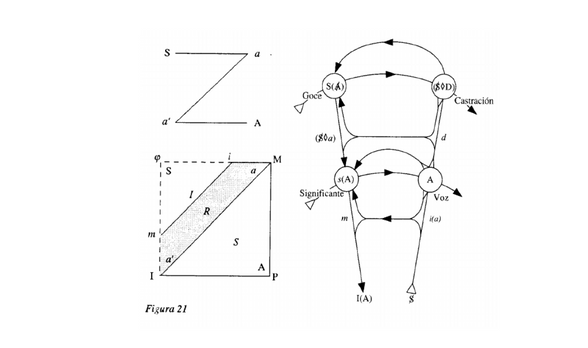
Axis of the Unconscious. LalangueThe sufficiently symbolizable analystThe Analyst’s SelfTheory of the four DiscoursesWe BorromeansLacanian Topology
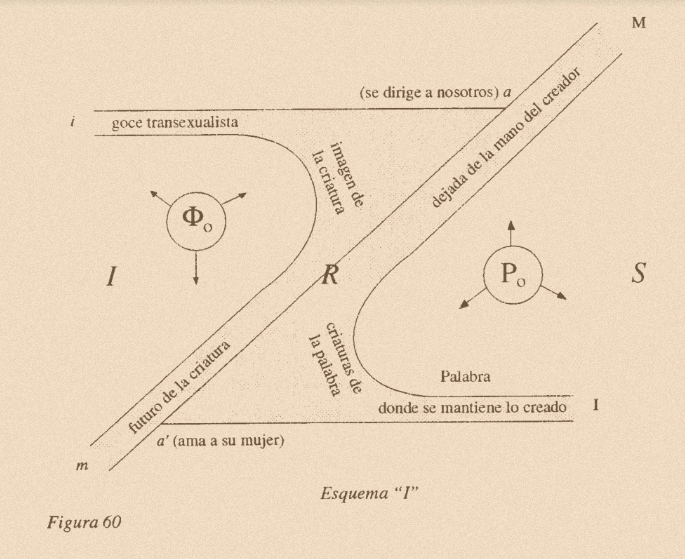
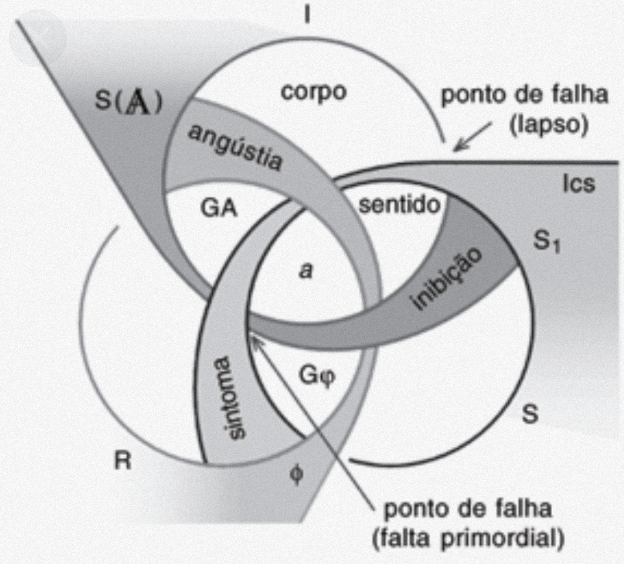
Where to Start?
Psychoanalytic Literature
1930 - 1960
M. Klein, D. Winnicott, Child psychoanalysis, Technique, Sexuality, Adolescence, Play
2000
Soler, QuinetTheory and Clinic of Psychosis
1940 - 1970
Lacan
Philosophy, Linguistics, Anthropology
2020
Dunker, Zizek, JA Miller: Lacan’s Legacy
1900 - 1930
Freud:
The beginning and the essence
What does a woman want?
What did Lacan say about women?Clinical introduction to Lacanian psychoanalysis
The discovery of the Incunconscious: From desire to symptomThe Neurotic Calculation of Enjoyment
The Clown and the Psychoanalyst
A Biography of Depression
Sade - Justine, Philosophy in the Bedroom
Remembering, repeating and elaborating
Mourning and Melancholy - The Psychoanalysis of the Child
Love, Guilt and Reparation - Anguish, Object Relation,
Identification, Transference, - Theory and Clinic of Psychosis
Psychosis and Social Bond - Philosophy and Literature: Hegel, Kierkegaard, Sartre
Collection and Analysis
Select a text, theme, excerpt to elaborate on.
The feelings, strangeness, confusion, criticisms with the text. What the text produces in us and what we have to do with it.
“What am I in this?”
What is the meaning of these signifiers?
Meeting Model# Preliminary Meetings
Online: video, voice
Scheduling
Frequency: 1x per week - monthly - - Investment: [80.00 - 250.00] per meeting - - Times: - Afternoon: from 2pm - Evening: from 7pm
Sessions
I do not advertise for analysts [Lacan, 1974]: “What I hope is that something will happen here: name…
I do not advertise for analysts [Lacan, 1974]: “What I hope is that something will happen here: namely, that a certain number of people will be analyzed here. In order to be an analyst - which is a very difficult position - for you to be analysts, I cannot in any way want to do it in your place. That must come from each one of you. It is an almost impossible position.
Desire
Shall we start this journey?
End of Analysis
Social Bond: love, work and play - Substitution of objects - - Reduction of Inhibition, Shame, Guilt…
Social Bond: love, work and play - Substitution of objects - - Reduction of Inhibition, Shame, Guilt before the Other - Disalienation of the Other - Invention and Responsibility - There is no guarantee
Remembering, Repeating and Elaborating
Inhibition, Symptom and Anxiety
Introduction to Narcissism
Clinical cases
Three essays on the theory of Sexuality The problem Economics of Masochism
Freud
Psychoanalysis
Foundations of psychoanalytic clinic
Fundamental Concepts of Psychoanalysis
Dreams, symptoms and failed acts
Clinical histories
Hysteria, obsession and other neuroses
Love, sexuality and femininity
Society, religion, culture
Thematic Work
Klein, Winnicott 1930 - 60
Works
Child Psychoanalysis
Narrative of the Analysis of a Child
Love, guilt and reparation
Envy and Gratitude
Style and Thought
The feeling of loneliness
Play and RealityThinking about Children
Child psychoanalysis,
Technique, Sexuality, Adolescence,
Play
Vol. 01 - Love, guilt and reparation and other works
Vol. 02 - The Psychoanalysis of Children
Vol. 03 - Envy and Gratitude and Other Works
Vol. 04 - Narrative of the Analysis of a Child
Complete Work
Part I - THE TECHNIQUE OF CHILD ANALYSIS
Psychological foundations of child analysis
The technique of analyzing young children
An obsessive neurosis in a young girland six years of age
The technique of analysis in the latency period
The technique of analysis in puberty
Neurosis in children
Sexual activities of children
Part II - ARCHAIC ANXIETY SITUATIONS AND THEIR EFFECTS ON CHILD DEVELOPMENT
Initial stages of the Oedipal conflict and the formation of the superego
The relationship between obsessive neurosis and the initial stages of the superego
The importance of archaic anxiety situations in the development of the ego
The effects of archaic anxiety situations on the sexual development of girls
The effects of archaic anxiety situations on the sexual development of boys
The development of a childInhibitions and difficulties in pubertyThe role of school in the libidinal development of childrenThe analysis of young childrenA contribution to the psychogenesis of ticsPsychological principles of child analysis smallSymposium on the reanalysis of childrenCriminal tendencies in normal childrenEarly stages of the Oedipal conflictPersonification in children’s playSituations of childhood anxiety reflected in a work of art and in the creative impulseThe importance of symbol formation in the development of the egoThe psychotherapy of psychosesA contribution to the theory of intellectual inhibitionThe early development of consciousness in childrenOn criminalityA contribution to the psychogenesis of manic-depressive statesWeaningLove, guilt and reparationMourning and its relations with manic-depressive statesThe Oedipus complex in the light of archaic anxieties
Lacan 1950 - 70
Writings and Other Writings
Lacan’s Seminars
The reverse side of Psychoanalysis
From an Other to the other
Of a discourse that was not semblance
RSI
The non-fools err
…or worse
Anxiety, - Object Relation,
Identification,Transference,
Style
Writings
Other Writings Seminars 1 - 27
On Paranoid Psychosis and its Relations with PersonalityThe Quarrel of DiagnosesThe Family
I’m Talking to the Walls
Names of the Father
The Triumph of Religion
Complete Works
Seminar 1 - “Freud’s Technical Writings” .1953-54.
Seminar 2 - “The Ego in Freud’s Theory and in the Technique of Psychoanalysis” .1954-55.
Seminar 3 - “The Psychoses” .1955-56.
Seminar 4 - “The Object Relation” .1956-57.
Seminar 5 - “The Formations of the Unconscious” .1957-58.
Seminar 6 - “Desire and Its Interpretation” .1958-59.
Seminar 7 - “The ethics of psychoanalysis” .1959-60.
Seminar 8 - “Transference” .1960-61.
Seminar 9 - “Identification” .1961-62.
Seminar 10 - “Anxiety” .1962-63.
Seminar 11 - “The four fundamental concepts of psychoanalysis” .1964.
Seminar 12 - “Crucial problems of psychoanalysis” .1964-65.
Seminar 13 - “The object of psychoanalysis” .1965-66.
Seminar 14 - “The logic of the phantasm” .1966-67.
Seminar 15 - “The psychoanalytic act” .1967-68.
Seminar 16 - “From One Other to the Other” .1968-69.
Seminar 17 - “The Other Side of Psychoanalysis” .1969-70.
Seminar 18 - “Of a Discourse That Does Notosse semblante” .1970-71.
Seminar 19 - “…Or worse” .1971-72.
Seminar 20 - “More, still” .1972-73.
Seminar 21 - “The not foolish err – the names of the father” .1973-74.
Seminar 22 - “R.S.I.” .1974-75.
Seminar 23 - “The Sinthome” .1975-76.
Seminar 24 - “The unknown that knows of a mistake is supported by death” .1976-77.
Seminar 25 - “The moment to conclude” .1977-78.
Seminar 26 - “La topología y el tempo” .1978-79.
Seminar 27 - “Disolución”.1980.
BeyondReality principle19pPsychoanalysis and its teaching23pOf the subject finally in questionSituation of psychoanalysisformation of the psychoanalyst in 195635pThe instance letter in the unconscious or reason since Freud39pVariants standard treatment40p ☺️❤️Kant with Sade29pSubversion of the subject and dialectic of desire in the Freudian unconscious36p🔥🔥🔥Aggressiveness psychoanalysis23p🔥👏Position of the unconscious22pSeminar on stolen letterOf our antecedentsOf a preliminary question every possible treatment of psychosis94pFormulations on psychic causalityThe Freudian thingFunction field of speech of language psychoanalysisGide’s youth or the letter and desireThe mirror stage as formative of the ego functionOf a designThe significance of the phallus logical time and the assertion of anticipated certaintyIntervention on transference
Theoretical introduction to the functions of psychoanalysis in criminology
In memory of Ernest Jones: On his theory of symbolism
Introduction to Jean Hyppolite’s commentary on Freud’s Verneinung 10p
Reply to Jean Hyppolite’s commentary on Freud’s Verneinung 19p
The direction of treatment and its principles 👏👏👏
Observation on Daniel Lagache’s report: Psychoanalysis and the structure of personality
From a posteriori syllabary
Guidelines for a Congress on female sexuality
From Freud’s Triebe and the psychoanalyst’s desire
Science and truth
Soler, Quinet, Nasio 2000 - 10
Works
Theory and Clinic of Psychosis
Psychosis and Social Bond
The unconscious in the open air of Psychosis
Memoirs of a Nervous Patient
The Great Cases of Psychosis
Psychosis
Schizophrenia
Paranoia
Melancholy
Soler, Brennan, Andre
Works
A critique of Lacan from a woman’s point of view
What does a woman want?
What did Lacan say about women?
The Woman
Fink, Quinet
Works
Clinical Introduction to Lacanian PsychoanalysisThe Discovery of the Unconscious: From Desire to Symptom
The Lacanian Subject
The 4+1 Conditions of Analysis
The Others in Lacan
Desire and Psychoanalytic Technique
Diagnosis and the Position of the Analyst
Social Bond
Dunker
Works
The Neurotic Calculation of Enjoyment
The Clown and the Psychoanalyst
A Biography of Depression
Pathologies of the Social
Reinvention of Intimacy
Confined Dreams
Neoliberalism as Management of Psychic Suffering
Enjoyment and the Theory of Value - Economic Concepts in Lacan…
Enjoyment and the Theory of Value - Economic Concepts in Lacan
Philosophy
Works
Sartre
Zizek
Foucault
Kierkegaard
Heidegger
Kant
Anguish
Literature, Philosophy, Psychoanalysis by Women
Judith ButlerSimone de BeauvoirHannah ArendtWendy BrownEve Kosofsky SedgwickLuce IrigaraySaba MahmoodMonique WittigGayatri Chakravorty SpivakJulia Kristeva
Philosophy
Virginia Woolf
Jane Austen
Judith Butler
Emily DickinsonPoetry and Brazilian Literature
Melanie Klein
Anna Freud
Helene Deutsch
Karen Horney
Elisabeth Roudinesco
Colette Soler
Maria Homem
Literature
Psychoanalysis
Literature
Graciliano Ramos
Machado de Assis
Charles Baudelaire
James Joyce
Schreber
Madness, poetry, text, theater
Women in Psychoanalysis
Melanie Klein
Anna Freud
Helene Deutsch
Elisabeth Roudinesco
Anguish
At the level of questioning, not of the subject’s place in the world, but of his existence as a subj…
At the level of questioning, not of the subject’s place in the world, but of his existence as a subject, a questioning that, from there, will extend to his intra-worldly relationship with objects and to the existence of the world, insofar as it can also be questioned beyond its order.
A truth of experience, for analysis, is that the question of his existence is posed to the subject, not under the guise of the anguish that it arouses at the level of the ego, and which is only one element of its procession, but as an articulated question: “What am I in all this?”, concerning his sex and his contingency in being, that is, whether he is a man or a woman, on the one hand, and on the other, the fact that he might not be, the two combining his mystery and linking him to the symbols of procreation and death.
What does Freud really tell us? He reveals to us a phenomenon that structures any revelation of trut…
What does Freud really tell us? He reveals to us a phenomenon that structures any revelation of truth in dialogue. There is the fundamental difficulty that the subject encounters in what he has to say; The most common is the one that Freud demonstrated in repression, that is, this type of discord between the signified and the signifier that is determined by all censorship of social origin.
Then he moves to the figure of the analyst, a place where this time his drama can be heard, because even if he does not want to be analyzed, what he needs, to alleviate his anguish, is to suppose that someone has knowledge about his suffering, to know that at some point he lost it.
A psychoanalysis has consequences, yes, serious ones because they concern the position of the subjec…
A psychoanalysis has consequences, yes, serious ones because they concern the position of the subject in his relationship with the other, the crossing of the fantasmatic organization altering the relationship of the subject with his object.
An analyst is nothing more than that, the place where people find knowledge about themselves, but th…
An analyst is nothing more than that, the place where people find knowledge about themselves, but they suppose, by transference, that this knowledge is in the other-analyst.